
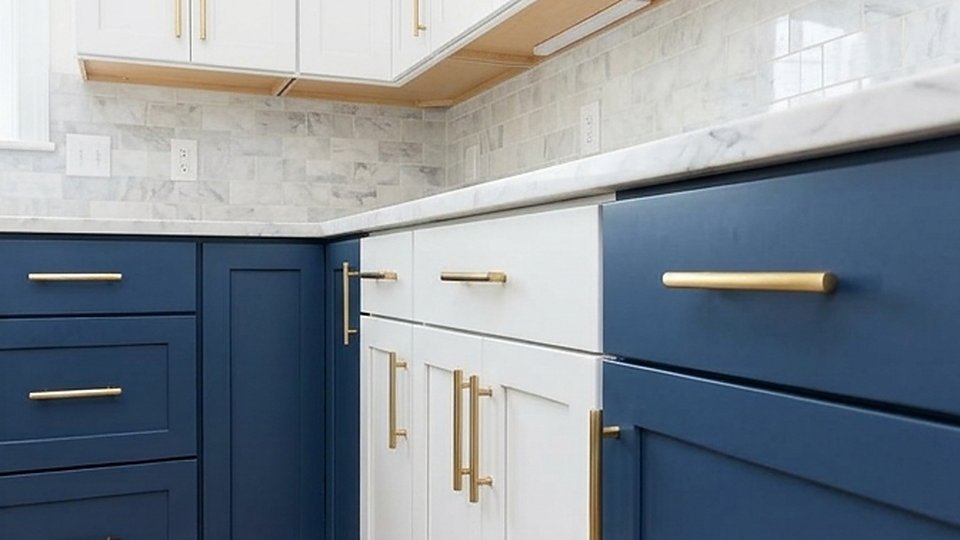
Touchpoints Define Perceived Architectural Quality
You rarely touch ceiling drywall, yet your hands grasp kitchen drawer pulls, pantry handles, and bedroom door levers dozens of times every single day. Replacing lightweight, hollow builder-grade nickel knobs and loose tubular door latches with solid-core brushed brass, knurled bronze, or matte stainless architectural pulls delivers immediate tactile luxury for a fraction of cabinet refacing costs.
Measure Hole Centers in Millimeters First—Not Overall Length
North American and European cabinet hardware is sized by Center-to-Center (CTC) screw spacing—the exact distance from the center of one mounting screw hole to the center of the second screw hole—rather than overall bar length. Before ordering replacement pulls for pre-drilled drawers, remove one handle and measure with a dual inch/millimeter ruler:
| Standard CTC Spacing | Imperial Equivalent | Ideal Drawer / Door Scale |
|---|---|---|
| 76 mm | 3 inches | Small vanity drawers & compact spice pull-outs |
| 96 mm | 3-3/4 inches | Standard builder-grade upper doors |
| 128 mm | 5-1/16 inches | Versatile studio standard for 15"–24" drawers & doors |
| 160 mm – 224 mm | 6-5/16" – 8-13/16" | Wide 30"–36" pot drawers & tall pantry doors |
The One-Third Drawer Proportion & Splinter-Free Drilling
When drilling brand-new cabinet fronts, choose pull lengths roughly one-third the width of each drawer face for balanced horizontal calm. Clamp a sacrificial scrap block of wood tightly behind the cabinet stile where the 3/16-inch drill bit exits—this prevents melamine or painted maple veneer from blowing out around the back screw head—and set your aluminum hardware jig once to replicate identical placement across the entire kitchen.