
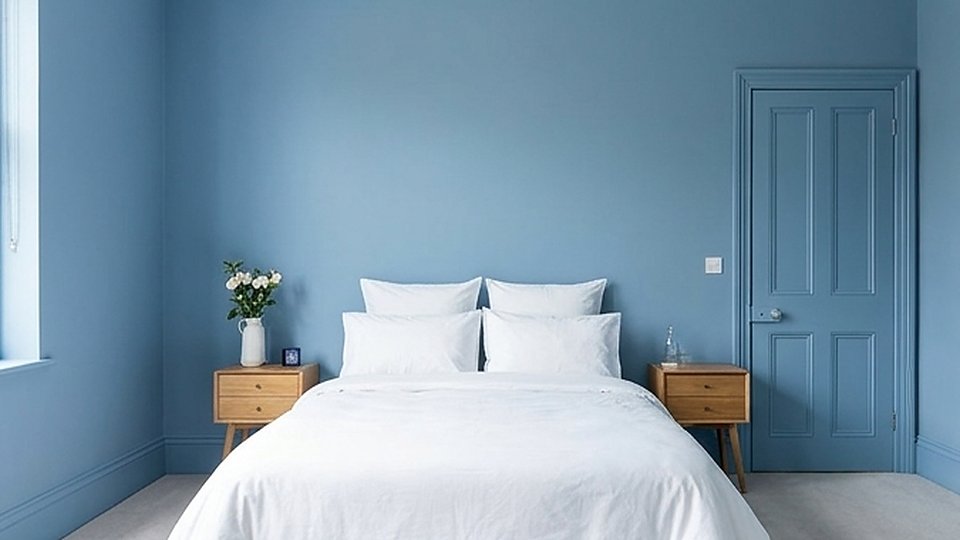
Why Stark White Baseboards Chop 8-Foot Ceilings Horizontally
Traditional North American tract homes default to bright white baseboards, white hollow-core doors, and white window casings framing colored walls. In grand 11-foot Victorian parlors with 9-inch historic millwork, high-contrast white trim celebrates ornate carpentry. In standard 8-foot bedrooms, hallways, or cozy dens with narrow 3.25-inch colonial baseboards, bright white horizontal bands outline every door frame and floor edge—acting like visual stop signs that remind the eye exactly how low the ceiling sits.
How Architectural Color-Drenching Works
Color-drenching paints the drywall, baseboards, door slabs, window casings—and optionally crown molding or ceiling planes—in the exact same pigment formula, relying on subtle sheen differences and natural light shadows to define architectural detail.
- Walls in Washable Matte (5% sheen) + Trim/Doors in Satin Waterborne Alkyd (25% sheen): Because both cans share identical color tint formulas, jarring contrast disappears, yet oblique daylight softly catches the satin door panels and baseboard bevels so the room looks tailored rather than flat.
- Best Hues for Drenching: Warm limestone, soft putty taupe, muted sage-olive, warm clay, and smoky mineral slate create enveloping boutique-suite serenity without overwhelming daylight.
Critical Preparation over Existing Oil or Glossy Latex Trim
Standard wall latex peels off slick semi-gloss doors around doorknobs within months. For durable trim and doors, scuff-sand existing moldings with a 180-grit angled sponge, wipe clean with a microfiber tack cloth, apply one coat of urethane-modified bonding primer if transitioning over old oil enamel, and topcoat with a waterborne alkyd urethane trim enamel tinted to your exact wall color.